


The most reliable route back to volume growth
A point of view on how the world’s largest CPG companies are rebuilding household penetration after a decade of price-led growth.
The analysis distils a three-step framework — distribution and marketing expansion, range and format expansion, and category expansion — anchored in three defining case studies: Lay’s, Oreo, and Dove.
It traces how each brand climbed the Ladder, how 2025 trading updates and CAGNY 2026 disclosures from PepsiCo, Mondelez and Unilever confirm the pattern continuing, and how two strategic dimensions — geographic footprint and portfolio architecture — shape how penetration scales over time.
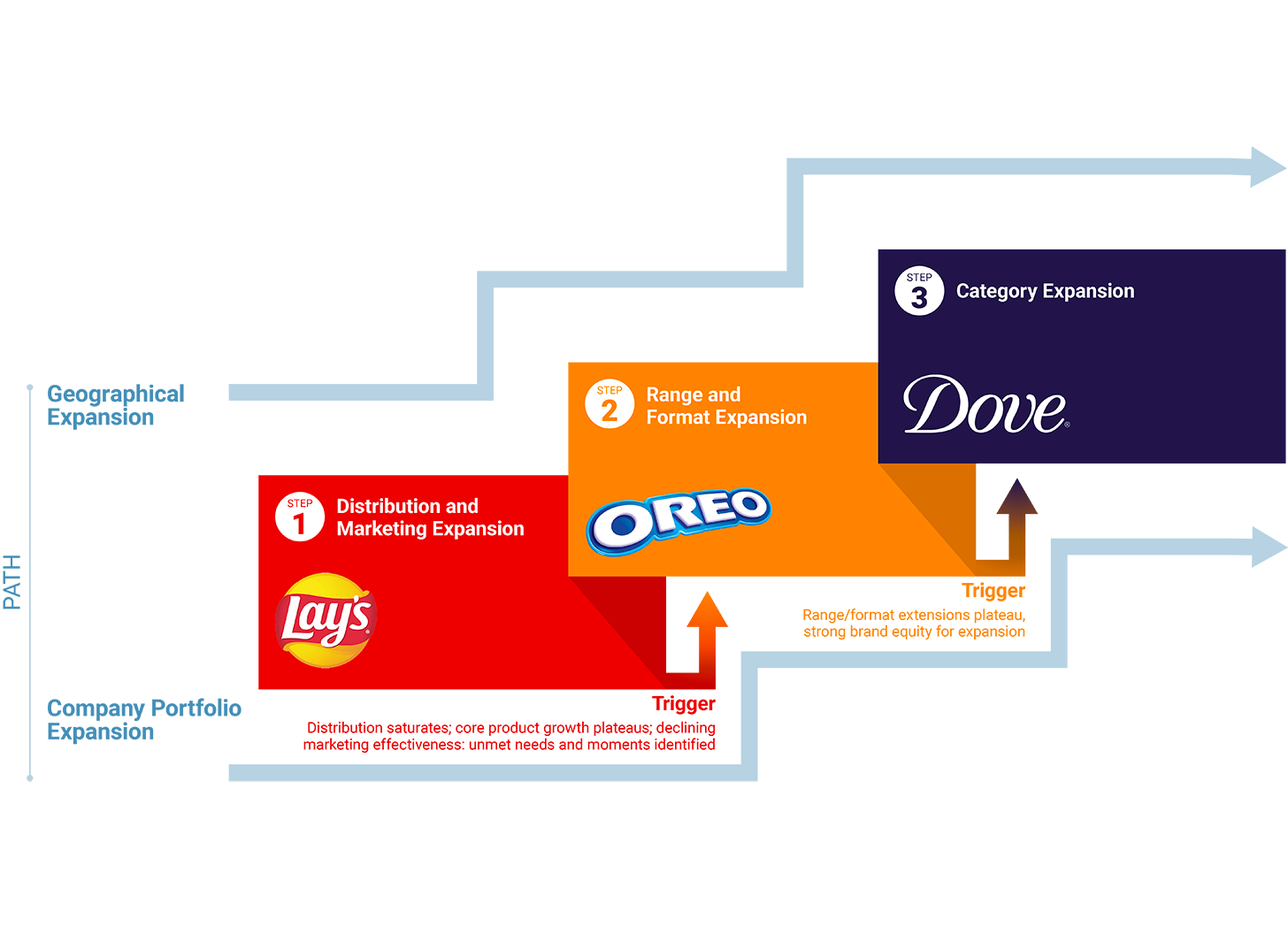
The Three-Step Penetration Ladder — Lay’s, Oreo and Dove, one case study per step.
Source: Sevendots Growth Series, Vol. 14
Why it matters
In 2025, volume turned structurally negative across the twelve largest CPG companies: organic revenue grew 2.2% while volume contracted 0.6%, negative in every quarter.
Companies that grew volume delivered an average +8% share price return; those with flat or negative volume fell 8%.
Penetration — not pricing — is the reliable route back to volume growth, and it behaves like a financial metric, not a marketing one.
There is still plenty of room to capture it: across the world’s fifty most-chosen FMCG brands, average global household penetration sits at just 21.5%, according to Kantar’s Brand Footprint 2025 study (2024 data).
Even the category leaders leave most of the world’s households as non-buyers in a given year — the opportunity is not exhausted, it is largely untapped.
Key insights
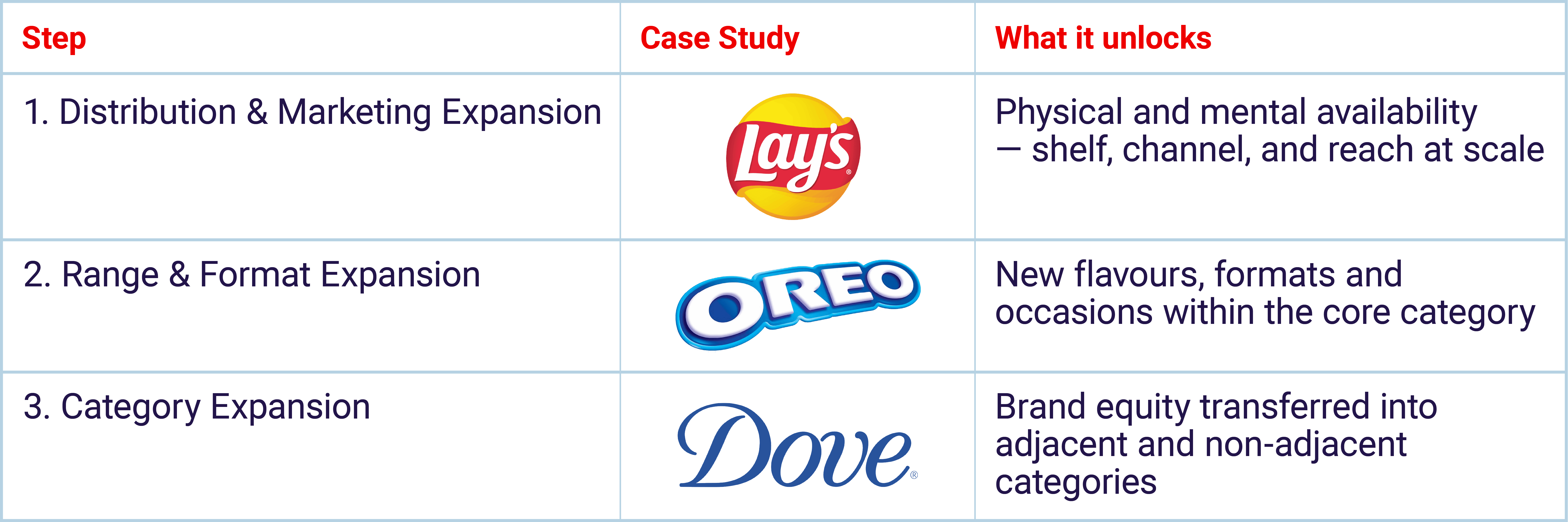
Not all penetration levers are available at once: a brand must master distribution before format innovation pays off, and format innovation before category expansion becomes credible.
Lay’s, Oreo and Dove each anchor a different step of the Ladder — and each is still compounding penetration into 2025, per CAGNY 2026 disclosures.
Geographic footprint and portfolio architecture are permanent strategic choices that run alongside the three operational steps.
A reference framework
The Three-Step Penetration Ladder, with the case study anchoring each step
Takeaway
Leading CPG companies are no longer treating penetration as a lagging brand-health metric — they are treating it as the primary lever for volume growth and, ultimately, shareholder return. The brands compounding penetration fastest are the ones that know exactly which step of the Ladder they are on, and which tools that step calls for.
Free readers get our latest thinking on CPG growth. Paid subscribers get the frameworks, case studies, and tools to put that thinking into action.
→ Become a Growth Builders subscriber
